1. Rapid Summary
Hypernatremia occurs when the serum sodium level rises above 145 mEq/L. Because sodium is the dominant extracellular cation, an elevated level creates a highly concentrated, hypertonic extracellular environment. This high osmotic pressure forces water to move out of the cells and into the vascular space via osmosis, causing cells to dehydrate and shrink. Like hyponatremia, the most critical organ impacted is the brain; as brain cells dehydrate and shrink, they stretch and rupture delicate cerebral blood vessels, putting the client at extreme risk for intracranial hemorrhage, altered mental status, and seizures. Hypernatremia is almost always caused by a deficit of pure water (inadequate intake, severe watery diarrhea, or Diabetes Insipidus) or, less commonly, an excess of sodium (excessive hypertonic IV fluids or sodium bicarbonate administration).
2. High-Yield Points/Must Know
| Assessment Parameter | Clinical Manifestations (Hypernatremia Signs) | Pathophysiology & Nursing Focus |
|---|---|---|
| Neurological | Extreme thirst (earliest sign), restlessness, agitation, confusion, lethargy, and hallucinations. | Brain cell shrinkage disrupts neural conduction and causes severe cognitive impairment. |
| Integumentary | Dry, sticky mucous membranes, flushed skin, swollen/red tongue, and poor skin turgor (if hypovolemic). | Severe cellular dehydration depletes interstitial and salivary fluid stores. |
| Neuromuscular & Late | Muscle twitching, hyperreflexia, seizures, coma, and death. | Profound intracellular fluid depletion leads to severe neuromuscular irritability. |
3. Mnemonics
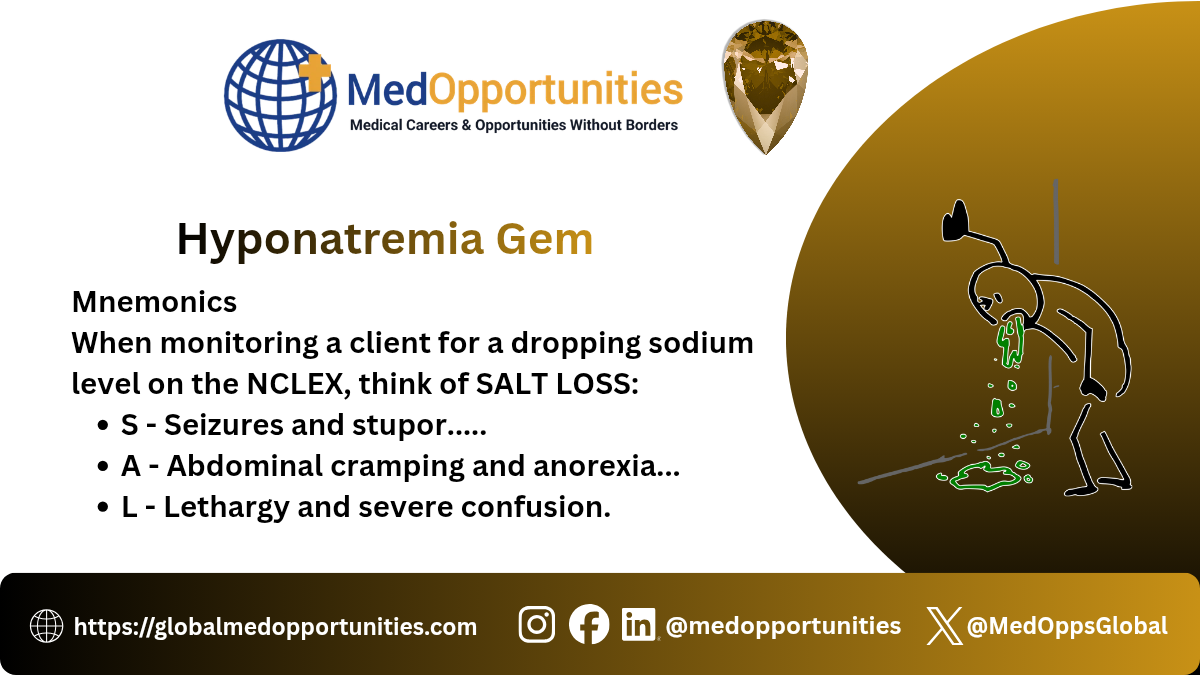
When checking a client for a high sodium level on the NCLEX, think of the phrase THE "FRIED" BRAIN:
- F - Fever (low-grade) and Flushed skin.
- R - Restlessness, agitation, and irritability (early neuro changes).
- I - Increased fluid retention and blood pressure (if caused by sodium excess).
- E - Edema (peripheral or pulmonary) or Extreme thirst.
- D - Decreased urine output and Dry, sticky mouth.
...and it's a "BRAIN" issue because cellular shrinkage causes confusion, hallucinations, and seizures!
4. Most Tested Facts
The Underlying Pathophysiology Dictates the Fluid Choice:
The NCLEX tests your ability to identify why the sodium is elevated to ensure you choose the correct replacement fluid:
- Dehydration / Water Deficit (Most Common): The client has lost water, concentrating the sodium.
- Treatment: Hypotonic IV Fluids (0.45% Normal Saline or 5% Dextrose in Water [D5W]). Note on D5W: Once infused, the body quickly metabolizes the dextrose, leaving behind pure, free water to cross into the dehydrated cells.
- Salt Excess: The client received too much sodium (e.g., drowning in saltwater, near-code situations with excessive Sodium Bicarbonate IV).
- Treatment: Diuretics to help the kidneys excrete sodium, alongside sodium-free water replacement.
The Cerebral Edema Risk (The Safety Red Flag):
When treating hypernatremia, lowering the sodium level too quickly is just as dangerous as the condition itself.
- The Threat: Brain cells adapt to chronic hypernatremia by generating internal particles to preserve their volume. If you drop the extracellular sodium level too fast by flooding the blood with hypotonic fluids, water will violently rush into the brain cells, causing cerebral edema (brain swelling), seizures, and death.
- NCLEX Metric: Serum sodium should be lowered gradually—no faster than 0.5–1 mEq/L per hour, or a maximum of 8–10 mEq/L within a 24-hour period.
5. Clinical Correlation
An elderly, non-communicative nursing home resident with advanced dementia is admitted with an elevated serum sodium level of 158 mEq/L, dry mucous membranes, and a heart rate of 118 bpm.
- The Misstep: Forcing the client to drink carbonated sodas or juice, or hanging an immediate rapid bolus of 3% Hypertonic Saline.
- The Right Priority Actions:
- Initiate Seizure Precautions: Pad side rails, verify wall suction works, and place oxygen equipment at the bedside, as shrinking or rehydrating brain cells can trigger electrical storms.
- Establish Controlled Hypotonic Infusion: Anticipate an order for 0.45% NS or D5W on an electronic infusion pump. Ensure frequent lab draws (every 2–4 hours) to verify the drop rate is safe.
- Strict Intake & Output (I&O) and Daily Weights: Monitor urine output and specific gravity closely to determine if the kidneys are concentrating urine properly.
- Provide Frequent Oral Care: Dehydrated mucous membranes are prone to painful breakdown and ulceration. Use water-soluble lubricants on the lips and soft swabs for the tongue.
6. Frequently Tested
- Diabetes Insipidus (DI): Look for hypernatremia paired with massive amounts of dilute urine (> 300 mL/hr with a urine specific gravity < 1.005). This is caused by a lack of Antidiuretic Hormone (ADH), meaning the body cannot hold onto water, leaving behind highly concentrated sodium.
- Vulnerable Populations: Infants, elderly individuals with dementia, and comatose clients are at the highest risk for hypernatremia because they cannot independently perceive or respond to thirst.
- Tube Feedings (Enteral Nutrition): High-protein tube feedings without adequate free-water flushes are a classic NCLEX cause of hypernatremia. Always verify that scheduled water flushes are ordered and administered.
7. Common NCLEX Trap
- Trap: Assuming all hypernatremic patients have fluid volume deficit and low blood pressure.
- Reality: If the hypernatremia is caused by sodium gain (e.g., excessive 0.9% NS or high-sodium medications), the client will actually exhibit fluid volume excess signs, such as hypertension, bounding pulses, and weight gain. Look at the root cause!
- Trap: Rehydrating a hypernatremic patient with plain water or hypotonic fluids as rapidly as possible to fix the "dryness."
- Reality: Fast rehydration will flood the brain cells with water, changing cellular shrinkage into fatal cerebral edema. Safe correction is always slow and steady.
- Trap: Relying on skin turgor over the back of the hand to assess dehydration in an elderly client.
- Reality: Elderly clients naturally lose skin elasticity. Assess skin turgor over the sternum or forehead, or rely on more sensitive indicators like sticky mucous membranes and acute body weight changes.
8. Mini Questions
Question 1: The nurse cares for an unconscious client with a head injury who has developed a serum sodium level of 154 mEq/L. The client's hourly urine output over the last three hours has averaged 450 mL of pale, dilute urine. Which underlying condition should the nurse suspect?
A. Acute Kidney Injury (AKI)
B. Syndrome of Inappropriate Antidiuretic Hormone (SIADH)
C. Diabetes Insipidus (DI)
D. Primary Hypoaldosteronism
- Answer: C
- Explanation: Head trauma can damage the hypothalamus or pituitary gland, stopping the release of Antidiuretic Hormone (ADH) and causing Diabetes Insipidus. Without ADH, the kidneys excrete massive quantities of dilute water, causing the serum sodium to rise rapidly due to hemoconcentration. SIADH presents with fluid retention and low sodium. AKI typically involves oliguria (low urine output).
Question 2: A client with hypernatremia is prescribed an intravenous infusion of 5% Dextrose in Water (D5W). The client's initial sodium level was 160 mEq/L. After 12 hours of therapy, the repeat serum sodium level is 142 mEq/L. For which clinical emergency should the nurse immediately assess this client?
A. Intracranial hemorrhage
B. Severe pulmonary edema
C. Grand mal seizures due to cerebral edema
D. Hypovolemic shock
- Answer: C
- Explanation: The client’s sodium dropped by 18 mEq/L in 12 hours. This is far too rapid (> 0.5–1 mEq/L/hr or > 10 mEq/L/day). Dropping sodium too quickly causes water to rapidly shift out of the hypotonic blood vessels and into brain cells, causing cerebral edema (brain swelling), which presents acutely as mental status failure and seizures. Intracranial hemorrhage is a risk of severe cellular shrinkage, not rapid rehydration.
Question 3: The nurse is planning care for an elderly client receiving continuous, high-protein enteral tube feedings. Which nursing intervention is a priority to prevent hypernatremia?
A. Administering the feeding formula at a cold temperature to slow absorption.
B. Checking the gastric residual volume every 2 hours.
C. Ensuring the prescribed free-water flushes are given on schedule.
D. Instilling a continuous low-dose infusion of 0.9% Normal Saline.
- Answer: C
- Explanation: High-protein, hypertonic tube feedings draw water into the GI tract and increase metabolic demands, risking dehydration and hypernatremia if water is not replaced. Scheduling and giving free-water flushes provides the necessary fluid volume to maintain osmotic balance. Normal saline contains high amounts of sodium and would worsen hypernatremia risk.
Question 4: A client with a serum sodium level of 152 mEq/L is agitated, reporting extreme thirst, and has dry, sticky oral mucous membranes. Which intravenous fluid order should the nurse expect from the healthcare provider?
A. 0.9% Normal Saline (0.9% NaCl)
B. 3% Hypertonic Saline (3% NaCl)
C. Lactated Ringer's (LR)
D. 0.45% Normal Saline (0.45% NaCl)
- Answer: D
- Explanation: The client is hypernatremic (> 145 mEq/L) and symptomatic. To treat a pure water deficit, a hypotonic solution like 0.45% NS is required to safely lower serum osmolality and rehydrate cells. 0.9% NS and LR are isotonic and contain high concentrations of sodium that would worsen the problem. 3% NS is hypertonic and completely contraindicated.
Question 5: Which assessment finding should the nurse recognize as the earliest indicator of hypernatremia in an adult client?
A. Presence of deep, hyperactive tendon reflexes (4+).
B. An intense, unquenchable sensation of thirst.
C. Generalized tonic-clonic seizure activity.
D. Intermittent auditory and visual hallucinations.
- Answer: B
- Explanation: Thirst is the body's primary defense mechanism against hyperosmolality. As sodium concentrations begin to rise, osmoreceptors in the hypothalamus trigger the thirst center immediately to prompt fluid intake. Neuromuscular changes (hyperreflexia), hallucinations, and seizures are later, more severe neurological signs indicating advanced cellular dehydration.
9. Key Takeaway Box
Key Takeaway: Hypernatremia (> 145 mEq/L) is a cellular dehydration crisis caused by water loss or salt gain that makes brain cells shrink. Look for extreme thirst, dry/sticky mucous membranes, agitation, and seizures. Treat dehydration causes with hypotonic fluids (0.45% NS or D5W), but ensure the infusion runs slowly to prevent fluid from rushing into brain cells and causing fatal cerebral edema!